All public places, including campgrounds, trailheads, and parks as well as scenic spots and overlooks, face the same challenge: providing visitors with safe and reliable toilets, even if sewer and water connections are not readily available. In many of these settings the traditional toilets with a plumbed design simply do not work. The cost of excavation as well as the distance to utilities, or the environment conditions may make it difficult for conventional construction.
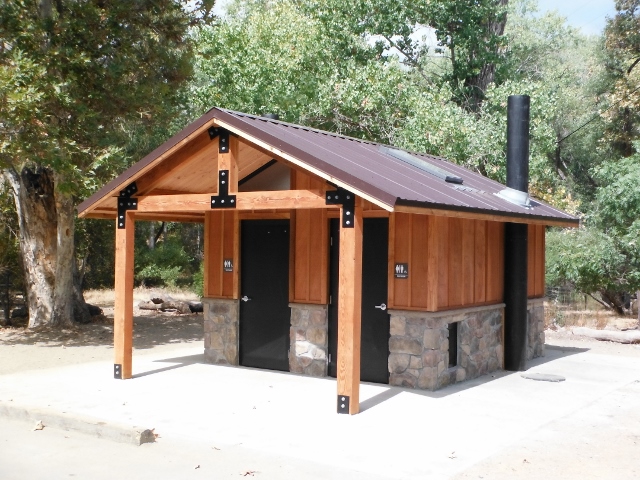
Vault toilets are a great solution. They provide a practical way to allow public access to outdoor spaces without the expense and disruption of installing full plumbing infrastructure. The vault bathrooms, however are not created equal. Nowadays, park managers and organizations are seeking solutions that go beyond the basic requirements. They are looking for structures that are long-lasting and easy to maintain. They want structures that are pleasant to use and attractive by the public.
The design of outdoor toilets has evolved.
For years, many people associated vault toilets with dark, unpleasant, purely functional structures that did little more than serve as a last resort. The image remains in some locations, but does not reflect the contemporary bathroom designs they offer.
Romtec has adopted a different strategy, looking at the potential of waterless toilets in public areas. Their vault toilets were designed to address both the practical problem of sanitation and hygiene without the necessity of water as well as to enhance the overall experience for visitors. The improvement in airflow, the usage of better materials as well as the flexibility of construction designs, and the use of odor-control technologies are all evident. Instead of being an unavoidable inconvenience, these restroom facilities could be viewed as a part of the park.
Modular vault toilets can be adapted without sacrificing durability
One of the greatest advantages of modular vault toilets is that they are able to be adapted to different site needs but still benefit from the efficiency of a simplified construction process. Some areas require a simple, single-occupancy unit that has an extremely small footprint. Other locations require triple, double or even higher occupancy facilities to manage the flow of campers, hikers, sports spectators, or even event guests.
Romtec offers both modular vault toilets as well as sites-built options, giving owners more flexibility in how they go about their projects. A smaller area may need a simple, cost-effective structure that can be constructed quickly and ready for use right away. A larger park, campground, or recreation area may need a more customized building with upgraded exterior finishes, an expanded space, or architectural features which better match the surrounding environment.
It is crucial to be flexible because bathrooms should be able to accommodate the needs of the room.
Toilets at remote sites must be able of performing in harsh conditions
In the countryside is different than adding a toilet to a park. The building might need to withstand harsh weather conditions, uneven terrain, a limited accessibility for maintenance, and frequent use by the public. In certain areas there might not be nearby utilities, no regular staff on site, and there is no room for the fragile components or systems that need continuous attention.
Bathrooms on remote sites must be designed keeping these realities in mind. Durability is one of essential aspects of the entire project. The materials must be able to endure heavy usage, temperature fluctuations, and exposure outdoors over the course of time. It is essential that layouts are easy to maintain. Even in places where visits aren’t as frequent, ventilation and odor control must be efficient.
Romtec’s vault restroom systems are designed for this type of long-term durability, assisting government agencies and site managers develop facilities that are able to continue serving guests without causing a continuous maintenance burden.
Better control of odors creates a better public experience
One of the most common complaints regarding outdoor restrooms is odor. Even a well-constructed structure will not make a good impression if it smells unpleasant. Ventilation and waste management are a crucial part of vault toilet design.
Romtec has developed its SST Sweet Smelling Technology to combat this issue. This technology is designed to increase airflow and decrease the odors that come with bathrooms that are water-free. It may seem like a small detail but it can have significant influence on how people perceive the entire facility. A restroom that feels fresh, clean and well-maintained is far more likely to be used with respect and awe in the context of the experience.
It is important to have a bathroom facility that is able to support the surrounding area
Even in remote locations, public restrooms don’t have to appear generic. Certain parks want a structure that blends into its natural surroundings. Others need a building that is representative of the architectural design of nearby facilities or characteristics. In areas with high use, larger restrooms might feel more like part of an integrated infrastructure for visitors rather than an ordinary structure.
The creation of custom-designed site-built alternatives to prefabricated vault toilets could add significant value. Romtec’s design flexibility allows owners to expand beyond the appearance of a typical drop-in model and create an attractive restroom that matches the aesthetics of the place and still provide the benefits of a waterless design.
Good sanitation supports better outdoor recreation
When the basic facilities in parks, campgrounds and trail systems are reliable, clean, and well-designed, people will be more likely to enjoy them. The vault toilets are only a only a small portion of the general experience for visitors however they have a significant impact on accessibility, comfort and sanitation as well as public satisfaction.
Romtec’s vault toilets that are modular are built to last and made for the real world. They also offer durable remote site restrooms that can withstand harsh conditions. A more efficient design process is crucial for parks and recreation facilities that require water-less toilets. This can benefit both the users and those who run the facility.