The drainage system that appears to work well in the normal conditions could be exposed by a catastrophic storm. Parking lots are flooded, detention ponds overflow fast access roads become hazardous, and low-lying areas start collecting water that has no place to go. In many instances, the issue is not just rain. The location may not have the correct system for moving stormwater in the event that gravity isn’t working enough.
A stormwater lift station becomes essential. The systems are intended for the collection and removal of stormwater from places where runoff naturally accumulates, protecting roads, buildings and outdoor areas. Lift stations are the most important element of any construction project, regardless of whether it is municipal, industrial commercial, residential or. They’re also essential in keeping the site running throughout and after storms.
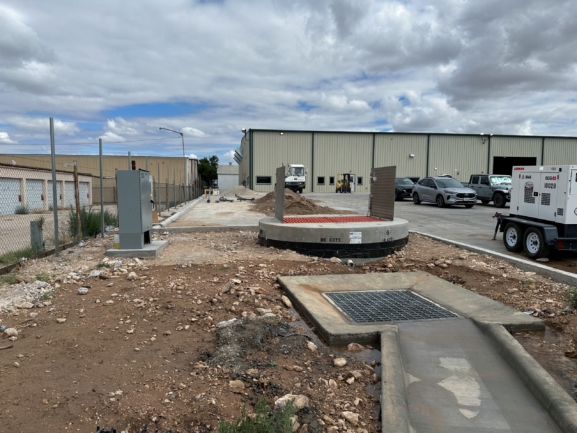
Stormwater management should be based on the specific site
Each property manages runoff in a different way. Retail centers with large parking areas behave differently than residential subdivisions, and they will not have the same needs as industrial drainage sites or municipal projects. The design of a stormwater system is influenced by a number of elements, including flow rate, site elevation as well as detention requirements and discharge conditions.
Romtec Utilities does not approach stormwater pumping as a typical package. Each system is designed according to the specific pumping needs of a site which includes controlling flooding, emptying detention ponds, managing runoff on a newly developed property or supporting a large municipal drainage network. The most appropriate solution is dependent on how much water must be pumped, the speed at which it needs to move, and where it needs to go.
A stormwater runoff pump station is much more than a simple pump that sits in a vault
A robust stormwater runoff pump station needs more than high-powered machinery. It is a coordinated system that seamlessly integrates structural, mechanical and electrical elements with control to manage effectively and consistently massive stormwater volumes. To ensure that the station functions optimally throughout its lifespan essential elements such as precise pump sizing, a strategic wet well design, sophisticated controls and durable piping, as well as robust power systems, as well as real-time monitoring have to work in perfect harmony.
The top stromwater designers can be distinguished by their complete system integration. The top designs don’t just address a drainage problem, but they also take an approach that is proactive and long-term. Top engineers are constantly thinking about the ease of ongoing maintenance as well as the future requirements for the site and the maximum efficiency of operations. In addition, it makes sure that the entire pumping system can be used to win in harsh, real-world storm conditions instead of relying on incorrect, ideal assumptions.
It is crucial to plan meticulously, regardless of whether you’re tackling torrential flooding or designing municipal networks with high pressure like clean water booster pumps stations because system failures are never an possibility. Romtec Utilities designs its stormwater systems taking into account these realities. They have a wide range of pump stations specifically designed to meet the needs of different types of applications. The pumps are accompanied by documentation, training and start-up assistance to ensure the owner can effectively manage their system.
Better planning creates better flood protection
A well-designed stormwater pumping station can lower the chance of flooding and improve the usability of the site and protect nearby property from water damage. It can also make a place secure by ensuring that water runoff is handled swiftly and efficiently whenever it rains heavily.
It’s easy to overlook stormwater infrastructure, until it goes down. But a dependable stormwater lift station is one of the most important investment a property owner, municipal or developer could invest in when runoff must be controlled actively rather than by passively. With the right design and the right support, a strong stormwater management system helps keep a site safer, more functional, and better prepared for the realities of changing weather.